Thanks to everyone who read and supported the Conn. Health I-Team. Publication of new content stopped as of Dec. 31, 2022. Since 2010 C-HIT has published in-depth public service journalism on a range of topics, including systemic problems within the health care system, health disparities in chronic illnesses, inequities in health care access, barriers to care in under-served communities, including LGBTQ+.
The repercussions of being homeless as a child younger than 6 can be lifelong, and the strain often shows in their speech, behavior, development and health, according to child-care workers and experts.
On a sunny, cool day as fall gave way to winter, a team of biologists and technicians dragged white cloths through the underbrush at Lord Creek Farm in Lyme. They were looking for blacklegged ticks, which carry Lyme disease and four other deadly illnesses.
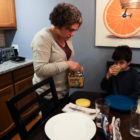
For Oliver Racco, it’s a part of his daily routine: eating a few peanut M&Ms.
It may seem like a treat to some kids, but for Oliver – and a relatively small but growing number of children – it’s an important way he and his family manage his peanut allergy.
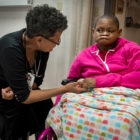
Jesus Manuel Gomez quit his restaurant dishwashing job when he saw the effect his long work days had on his 10-year-old son with special needs.
Although he was scheduled to work from 11 a.m. to 10 p.m., the Honduran native said through a Spanish-speaking interpreter that he would get out between midnight and 1 a.m. and then still be asleep when his son left for school the next morning.
A hysterectomy performed on a patient based on a faulty test result, and the death of two patients after failing to receive necessary monitoring or medication, failure to immediately investigate a complaint of patient abuse by a doctor, were among the incidents cited in the latest round of hospital inspection reports conducted by the state Department of Public Health (DPH).
Over the past 20 years, Connecticut women with cognitive or physical disabilities have found their way to the Gaylord Specialty Healthcare’s Gynecological Clinic for Women with Disabilities in Wallingford. There, obstetrician-gynecologist (ob-gyn) Anna Tirado provides routine and preventive gynecological care to disabled women.
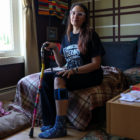
Unable to obtain morphine, Heather Weise, 50, lay balled up in pain at her home in Milford earlier this year. It took nine days to refill her narcotic painkiller and she blamed the clampdown on opioid prescriptions for her woes.