Hospitals Show Financial Gains, But Smaller Facilities Struggle

Connecticut’s acute-care hospitals ended the last fiscal year in slightly better financial health than in the prior year, with just five of 30 hospitals reporting losses, according to a new state report.

Data filed with the state Office of Health Care Access (OHCA) shows that six hospitals had operating losses in the 2012 fiscal year – the same number as in 2011, but fewer than in 2010. When non-operating gains and losses are included, five hospitals had negative total margins, or deficits – down from eight in 2011.

Brand-name Drug Choices Drive State’s High Medicare Costs

Connecticut seniors on Medicare are more likely to take sedatives for insomnia and medications for depression than their counterparts across the country, according to a new report by Dartmouth researchers.

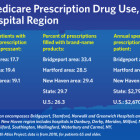
An analysis of state data in a national report by the Dartmouth Atlas Project also shows that Connecticut’s Medicare program relies heavily on brand-name drugs, versus generics, especially in wealthy towns in Fairfield County – a factor that could be contributing to the state’s ranking in the top 10 nationally in prescription drug spending per patient.

Rate Of Antipsychotic Prescribing In Nursing Homes Drops

Connecticut still ranks among the top 20 states in the use of antipsychotic drugs for elderly nursing home residents, but its rate of use has dropped 14 percent since 2011, new government data shows.

The percentage of patients receiving antipsychotics in the state’s nursing homes fell from 25.72 percent in early 2011 to 22.38 percent this year, according to new data from the Centers for Medicare & Medicaid Services (CMS). The state now ranks the 18th highest in the country in antipsychotic use – down from 16th highest in 2011, and no longer ranked among the top four states, as it was from 2005-10.

Hispanic Outreach Fuels CT Health Care Push

Cheila Serrano knows educating Hispanics who are uninsured and underinsured about the new options available at Access Health CT – the health insurance marketplace that opens for business today – presents a unique set of problems.

But with one in every four Hispanics lacking coverage, Serrano, a program director at Junta for Progressive Action in New Haven, is up for the challenge. Connecticut’s Hispanics represent the fastest-growing, youngest and poorest segment of the state’s population.

Progress On School Arrests, But Problems Remain, Report Shows

Arrests in Connecticut schools dropped 13.5 percent from 2008 to 2011, but hundreds of the arrests made in 2011 were for minor policy violations such as throwing erasers, shouting, or leaving class without permission, a new report says.

The report by Connecticut Voices for Children – the first comprehensive study of its kind in the state – also found significant racial disparities in arrest rates: Black students were 3.7 times more likely to be arrested than white students, and Hispanic students were 3.2 times more likely.