I-Team In-Depth
Infant’s Death Leads To Discovery Of Mystery Family Illness By Yale Researchers
|
For more than 40 years, Erik Drewniak has been plagued by high fevers and chills and never knew why.
Connecticut Health Investigative Team (https://c-hit.org/page/38/)
Thanks to everyone who read and supported the Conn. Health I-Team. Publication of new content stopped as of Dec. 31, 2022. Since 2010 C-HIT has published in-depth public service journalism on a range of topics, including systemic problems within the health care system, health disparities in chronic illnesses, inequities in health care access, barriers to care in under-served communities, including LGBTQ+.
For more than 40 years, Erik Drewniak has been plagued by high fevers and chills and never knew why.

Ava Passley covered her nose and giggled as Dr. Jacob Hen walked into an examination room at his pediatric pulmonology office in Trumbull recently.
Ava, 3, of Bridgeport, knows what to expect from a visit with Hen, having dealt with asthma since she was 1. She also spent several nights in the hospital after an attack in 2012. “I had always heard about wheezing, but had never really heard it before that,” her mother, Beverly Passley said.

For the last 50 years, men have consistently had an easier time quitting smoking than women.
More men go cold turkey. More men stop on nicotine blockers like gum and patches. More men succeed on medications.
Sherry McKee, an associate professor of psychiatry at the Yale School of Medicine, thinks she may know why.
A nurse who worked at Saint Francis Hospital and Medical Center for more than 30 years is suing the hospital for $2.5 million, claiming she was forced to give up her job in 2012 for “exceeding the scope” of her authority when she tried to save a patient’s life.
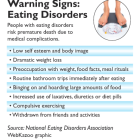
Thousands of Connecticut adults and children – some as young as 10 – struggle with eating disorders with many suffering secretly because the life-threatening psychiatric condition has gone undiagnosed and untreated, experts in the field report.
“We used to see eating disorders start at 13 or 14. Now we frequently see 10- and 11-year olds,” said Dr. Diane Mickley, founder and director of the Wilkins Center for Eating Disorders in Greenwich, which has treated females and males for three decades. Mickley is a founder and past president of the National Eating Disorders Association (NEDA).

Just a few years ago, it was rare that children with mental health problems would spend two or more nights in the emergency room at Connecticut Children’s Medical Center. Only 40 children stayed that long in 2010.
So far this year, more than 250 children have spent multiple nights in the emergency department (ED) – a number expected to reach 500 by the end of the year.

It’s been nine years since Eunice Ramirez served in Iraq, but she still suffers from war wounds – post-traumatic stress disorder, depression, respiratory problems and frequent crying triggered by her memories.
Suzanna Smaldone, who also returned home from Iraq in 2005, lives in constant pain and can’t bring herself to talk about her war injuries.
Cheryl Eberg, home from Iraq for seven years, counsels other veterans, but their war stories can trigger her own mental health issues.
Though it’s not unusual for veterans of both sexes to struggle for years with war injuries when they return home, officials say that women veterans have their own unique challenges, which can make their transition to civilian life particularly hard.