Restraints, Seclusions Target Students With Autism, New Report Shows

Children with autism were the most frequently subjected to restraint or seclusion in Connecticut schools in the 2012-13 school year, according to a new state report that tallied more than 33,000 incidents of physical restraint or seclusion in public schools and private special education programs.

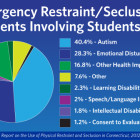
The report from the state Department of Education shows that autism was the primary disability among special education students subject to “emergency” restraint or seclusion, with 40.4 percent of all such incidents involving a child with autism. Autism also accounted for nearly half of all cases in which children were put in seclusion as part of their individualized education plans, or IEPs.

Over-The-Counter Drugs: A Prescription For Confusion

At Able Care Pharmacy & Medical Supplies in Enfield, Ashraf Moustafa often tries to avert disasters involving drugs displayed on his store’s shelves.

Moustafa, the pharmacy manager, recently spoke to an elderly woman seeking ways to treat dark blue patches on her arms. Instead of suggesting any remedies, he asked the woman what medicines she was taking and discovered that she was dangerously mixing over-the-counter anti-inflammatory drugs with aspirin and the prescription blood thinner, Plavix. He sent the woman to the hospital, fearing that she was suffering from internal bleeding.

“People have the impression that if a drug is approved for over-the-counter use, then it must be much safer than prescription medicine,” Moustafa says. “That’s when trouble happens.”

More Action On Child Care: State And In-home Providers Reach Agreement

The state and the recently formed union representing family child care providers in the Connecticut Care 4 Kids program announced an agreement Thursday that will provide for professional development and wage increases. The agreement came after nine months of negotiations between the two parties. Family child care providers who provide in-home care will undergo a four-hour orientation program that will include specialized trainings and information on the quality-enhancement programs offered by the Office of Early Childhood, the governor’s office said. Also, the state will offer incentives for license-exempt providers who seek state licensure, through a one-time, $500 bonus for maintaining their license status. The state now has hundreds of unlicensed family day care providers.