Hospitals Show Financial Gains, But Smaller Facilities Struggle

Connecticut’s acute-care hospitals ended the last fiscal year in slightly better financial health than in the prior year, with just five of 30 hospitals reporting losses, according to a new state report. Data filed with the state Office of Health Care Access (OHCA) shows that six hospitals had operating losses in the 2012 fiscal year – the same number as in 2011, but fewer than in 2010. When non-operating gains and losses are included, five hospitals had negative total margins, or deficits – down from eight in 2011. The annual OHCA report paints a positive picture of the overall financial health of hospitals, highlighting that Connecticut’s hospitals had a total gain from operations of about $513 million in the last fiscal year – a substantial increase, of close to 70 percent, over the prior year. Total hospital net assets also increased.

Brand-name Drug Choices Drive State’s High Medicare Costs

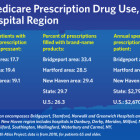
Connecticut seniors on Medicare are more likely to take sedatives for insomnia and medications for depression than their counterparts across the country, according to a new report by Dartmouth researchers. An analysis of state data in a national report by the Dartmouth Atlas Project also shows that Connecticut’s Medicare program relies heavily on brand-name drugs, versus generics, especially in wealthy towns in Fairfield County – a factor that could be contributing to the state’s ranking in the top 10 nationally in prescription drug spending per patient. Connecticut seniors spent an average of $2,795 on medications in 2010 – 45 percent higher than the lowest-spending state, Minnesota, and the highest rate in New England. The new report provides an in-depth look at how prescription drugs are used by Medicare beneficiaries, age 65 and older, in the program’s Part D drug benefit, which had 37 million enrollees in 2012. It shows wide variations in the use of both effective and risky drugs among the 306 regional health care markets across the U.S.

While the underlying health status of populations is a factor in prescription drug use, “it really does not explain the variations in drug use intensity that we observed,” said Dr. Nancy Morden, a lead author of the study.

Rate Of Antipsychotic Prescribing In Nursing Homes Drops

Connecticut still ranks among the top 20 states in the use of antipsychotic drugs for elderly nursing home residents, but its rate of use has dropped 14 percent since 2011, new government data shows. The percentage of patients receiving antipsychotics in the state’s nursing homes fell from 25.72 percent in early 2011 to 22.38 percent this year, according to new data from the Centers for Medicare & Medicaid Services (CMS). The state now ranks the 18th highest in the country in antipsychotic use – down from 16th highest in 2011, and no longer ranked among the top four states, as it was from 2005-10. Antipsychotic drugs are an important treatment for patients with certain mental health conditions, such as schizophrenia. But the Food and Drug Administration has warned that the drugs have potentially fatal side effects when used in elderly patients with dementia.

Hispanic Outreach Fuels CT Health Care Push

Cheila Serrano knows educating Hispanics who are uninsured and underinsured about the new options available at Access Health CT – the health insurance marketplace that opens for business today – presents a unique set of problems.

But with one in every four Hispanics lacking coverage, Serrano, a program director at Junta for Progressive Action in New Haven, is up for the challenge. Connecticut’s Hispanics represent the fastest-growing, youngest and poorest segment of the state’s population. Estimates of Connecticut’s uninsured vary. Approximately 344,000 people lack health insurance in Connecticut and 65 percent of the state’s uninsured are minorities, according to data being used by Access Health. Estimates released by the U.S. Census Bureau in September, however, put the uninsured at 284,000.

Progress On School Arrests, But Problems Remain, Report Shows

Arrests in Connecticut schools dropped 13.5 percent from 2008 to 2011, but hundreds of the arrests made in 2011 were for minor policy violations such as throwing erasers, shouting, or leaving class without permission, a new report says. The report by Connecticut Voices for Children – the first comprehensive study of its kind in the state – also found significant racial disparities in arrest rates: Black students were 3.7 times more likely to be arrested than white students, and Hispanic students were 3.2 times more likely. “The overall number of arrests have declined, which is an encouraging trend,” said Sarah Esty, the report’s author and a former policy fellow of Voices for Children. “However, there remains a great deal of work to be done in terms of students being arrested for behaviors that likely could have been handled without police involvement . .

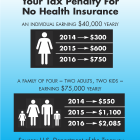
Should You Take The Health Care Tax Hit?

Time is running out for thousands of uninsured Connecticut residents who must decide whether to comply with a federal mandate to buy health insurance starting Jan. 1, 2014 or pay a penalty instead. “We are undertaking a paradigm shift in how we think about health insurance,” said Dan M. Smolnik, a tax attorney from Brookfield. “We don’t know for sure how people in Connecticut will respond. But I think the majority will weigh the risks of not having health insurance and make a rational decision that isn’t purely based on economics.

In New Battleground Over Toxic Reform, American Chemistry Council Targets The States

HARTFORD, Conn. — In the bare-knuckle war over toxic chemicals, the fight between industry and activists has shifted noticeably from Washington, D.C., to state venues such as the golden-domed Capitol that rises over Hartford like a lordly manse. What happened this year in Hartford shows how industry — fueled by the American Chemistry Council, a $100 million a year advocacy group glittered with Fortune 500 partners — is flexing its muscles from statehouse to statehouse to beat back efforts to disclose harmful chemicals or remove them from the shelves. In Connecticut, grassroots activists worked with state Rep. Diana Urban, a former professor of economics and politics, to craft a bill they viewed as little more than a baby step toward reform. The measure — An Act Concerning Children’s Products and Chemicals of High Concern — would have allowed the state Public Health Department to identify and list chemicals that posed dangers to children.

New Report Highlights Problems Of Hospital ‘Observation’ Stays

Medicare patients had more than 600,000 hospital stays in 2012 that lasted three nights or more but did not qualify them for follow-up nursing home care, according to a new report by the U.S. Department of Health and Human Services’ Office of Inspector General (OIG). Although the report does not include historical data, it indicates that hospitals in the U.S. increasingly are designating multi-day stays as outpatient or “observation status” visits, rather than inpatient admissions. In all, Medicare beneficiaries had 1.5 million hospital stays in 2012 that were classified as observation visits, with more than a third of them lasting two nights or more. The “observation status” designation – which often deprives Medicare recipients of coverage for follow-up nursing home care – is being challenged in a lawsuit in U.S. District Court in Hartford and in legislation proposed by Democrat U.S. Rep. Joe Courtney, who represents the 2nd Congressional District. Many Medicare beneficiaries who come to hospitals in emergencies are classified as observation patients, even though the care they receive may be indistinguishable from the care received by patients classified as inpatients. Under current rules, Medicare will not pay for a stay in a skilled nursing facility after hospitalization unless the beneficiary has been classified as an inpatient for at least three consecutive days.

Thousands Of Nursing Home Beds Empty As State Rebalances Care

At the Governor’s House Rehabilitation & Nursing Center in Simsbury, 17 of the nursing home’s 73 beds sat empty this spring – a 23-percent vacancy rate that would have been unlikely five years ago. The home’s occupancy has fallen despite its above-average health care quality scores in the federal government’s rating system. “There are a lot of factors – a lot of initiatives out there now to keep people out of nursing homes,” said Keith Brown, the home’s administrator. “And with the increase in home care, we’re seeing a more frail resident population. So we have fewer residents, with higher acuity.”

The Simsbury home is not unique: Nearly a third of Connecticut’s nursing homes are less than 90 percent occupied, with Litchfield and Tolland counties bearing the highest vacancy rates, an analysis of state data shows.