Murphy Pushes NIH To Increase Research Funding To CT

Saying Connecticut has shouldered “more of the cuts than other states,” U.S. Sen. Chris Murphy has urged the head of the National Institutes of Health (NIH) to restore funding for cancer and other disease research at Yale University and other institutions. “This reduction in funding has had a profound effect at one of the nation’s premiere institutions at a time when researchers are on the cusp of major advances,” Murphy wrote in a Jan. 21 letter to Dr. Francis Collins, NIH director. Murphy’s letter was prompted by an October C-HIT story that found that Connecticut’s share of funding from the National Cancer Institute had dropped 19 percent since 2010 – a steeper decline than many other states. Federal cancer institute funding to Connecticut fell to $33.4 million in 2014 – down from $41.1 million in 2010.
Hospital Reports Of Surgical, Medication Errors Climb

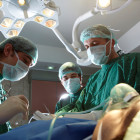
Connecticut hospitals reported record numbers of patients killed or seriously injured by hospital errors in 2013, with large increases in the numbers of falls, medication mistakes and perforations during surgical procedures, a new state report shows. The report, covering 2013, marks the first time that the number of so-called “adverse events” in hospitals and other health care facilities has topped 500 – double the number in 2012, when 244 such incidents were reported. Much of the increase was due to an expansion of reporting on pressure ulcers, which added a new category with 233 “unstageable” ulcers that were not counted before. Even without that category, however, reports of adverse events climbed 20 percent over 2012. The most significant increases were in the numbers of patients harmed by foreign objects left in their bodies after procedures – doubling from 12 to 25 in one year — or those harmed by perforations during surgical procedures – 79, compared to 55 the previous year.

Breastfeeding Rates On The Rise, As Mother-Baby Support Systems Expand

Candid online posts describing the challenges of breastfeeding fill the Facebook page of Breastfeeding USA’s Connecticut chapter. The daily stream of anecdotes, questions and comments alternate in tone from exasperated to celebratory. “Small victory for today. I actually breastfed in the open with my husband and day care provider in the same room (with a nursing cover, of course), but I haven’t done that yet, so I feel good about it. “

“Any tips to get better pumping results?

Operating Profits Drop At State Hospitals: New Report

Connecticut’s acute-care hospitals saw gains from their operations tumble 35 percent in the last fiscal year, with seven of 29 hospitals reporting operating losses, according to a new state report. While hospitals still ended the year with $597 million in profits overall, the report by the state Office of Health Care Access (OHCA) raises concerns that non-operating revenue, such as income from investments, was masking the decline in operating revenue. “While hospitals’ operational financial performance weakened in FY 2013, they continued to generate significant non-operating gains, helping to keep overall hospital financial performance strong,” the report says. “However, a robust financial picture should rely more on patient and other operating revenues, and not on a less than reliable income source, such as investment performance.”

Hospitals’ profits from operations dropped to $333.6 million, from $513.5 million in the 2012 fiscal year. At the same time, hospitals earned $70 million more from investments, charitable contributions and other sources of revenue.

Half Of State Hospitals Exceed Infection Rates, New Data Show

State health inspectors visiting Stamford Hospital in late 2012 turned up several infection-control violations, including the improper drying and storage of endoscopes, instruments used to look inside the body. An inspection of Hartford Hospital in 2012 found an operating room with “dust and darkened debris” on top of pumps attached to IV poles, a container of syringes “overflowing” a protective cover, and brownish stains on the floor and underside of the operating table. These kinds of lapses, while not directly tied to patient infections, have contributed to Connecticut’s poor ratings on some federal measures of hospital-acquired infections. Newly released data show that more than 50 percent of the state’s hospitals had rates for at least one type of hospital-acquired infection that were worse than federal benchmarks, in late 2012 and 2013. No other state had a higher percentage of its hospitals exceeding the infection standards set by the U.S. Centers for Disease Control and Prevention, and most states had fewer than 20 percent, according to the data, compiled by Kaiser Health News.

Exploring Black Cohosh, Hot Peppers, In Breast Cancer Treatment

Dr. Erin Hofstatter, a young research scientist and breast cancer specialist at Yale’s Smilow Cancer Hospital, often prescribes tamoxifen, raloxifene and similar drugs to her patients. The drugs “reduce your risk (of cancer recurring) by half … but they come with baggage,” she tells her patients, “hot flashes, night sweats, leg cramps, small risk of uterine cancer, small risk of blood clots, small risk of stroke, you have to get your liver tested.”

Hofstatter’s unease with standard treatments for breast cancer has spurred her to seek alternative, safer ways to treat breast cancer. To this end, she has begun a study of black cohosh, in the pill form of an herb from the buttercup family, used for thousands of years by Native Americans to treat menopausal symptoms.

“There’s data to suggest that [black cohosh] is protective,” she said, “both in breast cancer survivors and potentially preventive in women who’ve never had breast cancer, based on a few large observational trials.”

Just as practices like acupuncture and meditation – once considered, at best, nontraditional are now widely used to help patients cope with the side-effects of cancer treatments and other illnesses, natural products – foods (blueberries, walnuts, soy), herbs like black cohosh and plant-based anti-oxidants like capsaicin (which makes hot peppers hot) have become accepted subjects for research. But far from simply embracing these practices or foods, scientists now apply rigorous scientific methods to what are considered non-traditional medications to determine just how effective – or ineffective — they are. A similar scientific focus is being directed at exercise, diet, and meditation.

DCF’s Level Of Involvement A Factor In Child Deaths, Review Says

Child deaths in families involved with the state Department of Children and Families are more likely in cases where agency workers have spent less time assessing and interacting with parents, a preliminary review by the agency indicates. In recent legislative testimony, a DCF official said that an ongoing review of 248 cases – half in which a child under the age of 4 had died, and half in which there was no fatality – had turned up a number of “risk factors,” including the young age of parents, addiction and mental health problems, and a lack of “quality” contact with DCF social workers. “We found that, in the comparison or control cases (where no fatalities occurred), we were assessing parents more, we were visiting parents more. The quality of home visits were more of (high) quality than those in which fatalities had occurred,” DCF research supervisor Janet Gonzalez told members of the Committee on Children. That finding “feeds one of our recommendations, in regards to enhancing the assessments that we do of families in the home,” she said.