Infant’s Death Leads To Discovery Of Mystery Family Illness By Yale Researchers

For more than 40 years, Erik Drewniak has been plagued by high fevers and chills and never knew why. Whenever he got a 104 or 105-degree fever that would linger for a day or two, he and his family always figured that was just “how he got sick.” He still was able to excel at school, play sports and live a normal life, but the fevers would strike intermittently. It wasn’t until late 2012 into early 2013, following the death of his newborn son, that Drewniak learned what has been causing his fevers. He has an extremely rare gene mutation that Yale School of Medicine researchers uncovered through DNA sequencing. “I’m definitely grateful,” said Drewniak, 45 of Fairfield.


ER Visits And Hospitalizations For Asthma On The Rise

Ava Passley covered her nose and giggled as Dr. Jacob Hen walked into an examination room at his pediatric pulmonology office in Trumbull recently. Ava, 3, of Bridgeport, knows what to expect from a visit with Hen, having dealt with asthma since she was 1. She also spent several nights in the hospital after an attack in 2012. “I had always heard about wheezing, but had never really heard it before that,” her mother, Beverly Passley said. Ava is part of growing number of people in Connecticut who have used the emergency room for asthma symptoms, according to the most recent figures from the state Department of Public Health.

Meds To Alleviate Stress May Help Women Smokers Quit

For the last 50 years, men have consistently had an easier time quitting smoking than women. More men go cold turkey. More men stop on nicotine blockers like gum and patches. More men succeed on medications. Sherry McKee, an associate professor of psychiatry at the Yale School of Medicine, thinks she may know why.

Nurse Sues St. Francis, Claims She Lost Her Job After Saving A Patient’s Life

A nurse who worked at Saint Francis Hospital and Medical Center for more than 30 years is suing the hospital for $2.5 million, claiming she was forced to give up her job in 2012 for “exceeding the scope” of her authority when she tried to save a patient’s life. Annemarie Morrissey of West Hartford is suing the hospital for breach of implied contract of employment, violation of the covenant of good faith and fair dealing, wrongful discharge in violation of public policy, negligent infliction of emotional distress, and defamation. She has requested a jury trial and is waiting to hear if one will be granted. In court documents, the hospital denies the allegations. Fiona Phelan, a St.

Children As Young As Ten Battling Eating Disorders

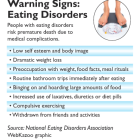
Thousands of Connecticut adults and children – some as young as 10 – struggle with eating disorders with many suffering secretly because the life-threatening psychiatric condition has gone undiagnosed and untreated, experts in the field report. “We used to see eating disorders start at 13 or 14. Now we frequently see 10- and 11-year olds,” said Dr. Diane Mickley, founder and director of the Wilkins Center for Eating Disorders in Greenwich, which has treated females and males for three decades. Mickley is a founder and past president of the National Eating Disorders Association (NEDA). “We’re concerned that there are many boys and girls flying under the radar who could be struggling with eating disorders that aren’t diagnosed or treated,” said Craig Brown, a founder and chief executive officer for Center for Discovery, which since 2011 has opened two adolescent residential treatment centers in Fairfield County for youth ages 11 to 17.

Long ER Stays For Kids In Crisis On The Rise

Just a few years ago, it was rare that children with mental health problems would spend two or more nights in the emergency room at Connecticut Children’s Medical Center. Only 40 children stayed that long in 2010. So far this year, more than 250 children have spent multiple nights in the emergency department (ED) – a number expected to reach 500 by the end of the year. As policy makers work to finalize a statewide children’s behavioral health plan, a report by the hospital, obtained by C-HIT, projects that children with mental health problems will spend a total of 3,085 nights in the ED – more than triple the number in 2010. The average stay is about 15 hours, with some children remaining in the ED for 10 days or more.

Years Home, Female Iraq Vets Endure The Wounds Of War

It’s been nine years since Eunice Ramirez served in Iraq, but she still suffers from war wounds – post-traumatic stress disorder, depression, respiratory problems and frequent crying triggered by her memories. Suzanna Smaldone, who also returned home from Iraq in 2005, lives in constant pain and can’t bring herself to talk about her war injuries. Cheryl Eberg, home from Iraq for seven years, counsels other veterans, but their war stories can trigger her own mental health issues. Though it’s not unusual for veterans of both sexes to struggle for years with war injuries when they return home, officials say that women veterans have their own unique challenges, which can make their transition to civilian life particularly hard. “The trauma and complexity of these injuries and disabilities far outweigh anything we can comprehend in the civilian world,” said Linda Schwartz, commissioner of the Connecticut Department of Veterans Affairs.

Low-Dose Aspirin May Reduce Risk Of Some Cancers

What if an aspirin a day could keep cancer away? A growing body of scientific research suggests that aspirin can prevent some cancers of the digestive system, and maybe even breast and prostate, too. In the latest study, published today in the journal Cancer Epidemiology, Biomarkers & Prevention, Yale University researchers found that patients from 30 hospitals across the state were less likely to develop pancreatic cancer if they took a small, daily dose of aspirin. Researchers are stopping short of recommending aspirin as a broad cancer prevention tool, because of its possible side effects, including stomach pain and gastrointestinal bleeding. “Aspirin is not a risk-free substance,” said Dr. Harvey Risch, a professor of Epidemiology at the Yale School of Public Health, who led the research.

Early Pregnancy Blood Test Reducing Need For Amniocentesis

A simple blood test is transforming the world of prenatal screening, offering women a risk-free way to learn about fetal abnormalities early in pregnancy. Already, the new test has drastically reduced the demand for amniocentesis, an invasive procedure that diagnoses chromosomal disorders in mid-pregnancy and occasionally causes miscarriage. The blood test, which became available in late 2011, can analyze DNA to predict Down Syndrome and a few other genetic diseases as early as nine weeks in pregnancy, says Dr. Daniel Gottschall, medical director of Women’s Health Connecticut, a group practice with 80 offices around the state. “It’s almost like science fiction to see how they can do this with such a high level of accuracy,” says Leslie Ciarleglio, a genetics counselor at Hartford Hospital, where the number of amniocentesis procedures plummeted by more than 70 percent in just two years — from 112 in 2011 to 32 in 2013.   “It’s far more accurate than any screening test we’ve had before.”

The test, which experts consider one of the most important clinical tools to emerge so far from the genomics revolution, can alleviate fear and suffering for pregnant women worried about birth defects.   But the medical advance also raises disturbing questions about the future of screening — and whether the quest for the perfect baby could go too far. Currently, most women who get the blood tests are carrying high-risk pregnancies.

State Restrains Psychiatric Patients At High Rate

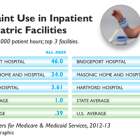
As the state works to improve its mental health system, new federal data show that hospitals in Connecticut restrain psychiatric patients at more than double the average national rate, with elderly patients facing restraint at a rate seven times the national average. In addition, the state lags behind in providing adequate post-discharge continuing care plans for psychiatric patients, especially teens and the elderly. Connecticut’s 28 inpatient psychiatric units and hospitals developed continuing-care plans for fewer than 70 percent of patients they discharged from October 2012 to March 2013 – indicating that thousands of patients may have left facilities without adequate treatment and medication plans. A C-HIT analysis of the federal data, released by the Centers for Medicare & Medicaid Services for the first time, show that Connecticut ranks in the top fourth of states (11th highest) in the use of physical restraints in inpatient psychiatric facilities – and is the third highest state in restraining patients 65 and older. Two psychiatric units – at Bridgeport Hospital and Masonicare Health Center in Wallingford – have the 10th and 12th highest rates of restraint use, respectively, among the 1,753 psychiatric facilities nationwide that are included in the federal reports, which cover October 2012 through March 2013.