
Thousands Of Children Suffer From Lead Poisoning, Many Not Tested

Nearly 60,000 Connecticut children under age 6 were reported with lead exposure in 2013, and an additional 2,275 children had high enough levels of the toxin in their blood to be considered poisoned. While those numbers, the latest available from the state Department of Public Health, may seem high, health experts say they actually must be higher because of significant gaps in state-mandated testing. Even though Connecticut has some of the strictest lead-screening laws in the country – requiring every child to be tested twice, before age 3 – DPH figures show that only half were screened twice, as mandated. Unlike in Flint, Mich., whose residents were poisoned when a corrosive water source was directed through aging lead-lined pipes, the main culprit in Connecticut is lead paint. Though banned in 1978, lead-based paint is present in countless older apartment buildings and homes, especially in urban centers, such as Hartford, New Haven and Bridgeport.

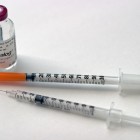
Low-Income Diabetics Paying High Price For Insulin

The high cost of insulin, which has risen by triple-digit percentages in the last five years, is endangering the lives of many diabetics who can’t afford the price tag, say Connecticut physicians who treat diabetics. The doctors say that the out-of-pocket costs for insulin, ranging from $25 to upwards of $600 a month, depending on insurance coverage, are forcing many of their low-income patients to choose between treatment and paying their bills. “Some of my patients have to make the choice between rent or insulin,” said Dr. Bismruta Misra, an endocrinologist with the Stamford Health Medical Group. “So they spread out taking insulin [injecting it less frequently than a doctor has prescribed] or don’t take it.”

Experts and recent studies point to drug companies’ long-standing patents and the lack of generic or “biosimilar” insulin as key reasons why the drug is so expensive. A study by Philip Clarke, a professor of health economics at the University of Melbourne in Australia, reported that the price of insulin has tripled from 2002-2013.

Death At Surgery Center Raises Questions About Emergency Care

In surgery, when something goes wrong, minutes become hours. Minutes are the focus of a lawsuit filed by the family of a 29-year-old Seymour nurse who died in February 2015 after undergoing minor elective sinus surgery at the North Haven Surgery Center. The suit alleges that the center waited as long as 29 minutes to call an ambulance after Katherine O’Donnell’s blood pressure and pulse fell to critical levels on the operating table – and that doctors continued to proceed with surgery, even as their efforts to resuscitate her failed. The case raises questions about how well equipped freestanding surgical centers are to handle emergencies, and what sanctions they face for alleged lapses in care. The lawsuit alleges that the center and Fairfield Anesthesia Associates, LLC, which handled anesthesia in the case, failed to properly respond by stopping the surgery immediately and calling a “Code Blue” emergency when O’Donnell’s blood pressure and oxygen levels plummeted.

Essure Contraceptive Under FDA Review After Public Outcry

When Alyson Hannan, 44, decided she was done having children, she chose Essure, a non-surgical permanent birth control option approved by the Food and Drug Administration. The day the tiny metal coils were inserted into her fallopian tubes in her doctor’s office is one that she can’t forget, said Hannan, regional sales director for Met Life who underwent the procedure on Sept. 11, 2014. “I will never forget that date. None of us will.”

Hannan is among tens of thousands of women, now referred to as “E-Sisters,” who have banded together on Facebook to share their stories of adverse health problems, including allergic reactions, chronic pelvic pain, device migration, hair loss and headaches.

18 State Hospitals Penalized For High Infection Rates

Eighteen Connecticut hospitals will lose 1 percent of their Medicare payments in 2016 as a penalty for comparatively high rates of avoidable infections and other complications, such as pressure sores and post-operative blood clots, according to new federal data. The Centers for Medicare & Medicaid Services (CMS) announced this month that 758 of the nation’s hospitals – about 23 percent of all eligible hospitals — would be penalized for patient safety lapses in the second year of the Hospital-Acquired Condition Reduction Program, which was mandated by federal health care reform. The penalties are based on rates of infections and other complications that occurred in hospitals between 2012 and 2014. The 18 hospitals in Connecticut include larger urban institutions, such as Yale-New Haven, Hartford and Bridgeport hospitals, and smaller hospitals, such as Manchester Memorial and Windham. They are among hospitals in the worst performing quartile nationally on patient-safety measures including the frequency of central-line and catheter-related infections, post-operative sepsis and accidental laceration.