Nursing Home Disclosure Bill Wins Approval

A bill requiring for-profit nursing homes that receive state funding to report their profits and losses from related businesses won legislative approval early Tuesday – a win for the union representing nursing home workers, which had the Malloy administration’s backing. The state Senate voted 24 to 11 to approve the bill, which also empowers a Nursing Home Financial Advisory Committee to examine quality of care, staffing levels and the financial solvency of nursing homes. The bill passed the House last week. The legislation requires nursing homes to disclose the financial status of any “related party” businesses that contract with the homes – such as associated companies that own the facility properties, or spinoff businesses that provide rehabilitation or management services. The original proposal required that the nursing homes report profits and losses for any related businesses that receive more than $10,000 a year, but that dollar amount was upped to $50,000 in the final proposal.

Autism Treatment For Under-Threes Is Key, But Diagnosis Is Tough

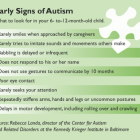
Most children with autism are well past their fourth birthday by the time they’re diagnosed with the condition, according to new government data. Their parents and teachers may have raised red flags earlier, but it takes months or years to confirm suspicions with a formal diagnosis.  And therapy rarely starts without one. “The school wouldn’t do anything for us until we had a diagnosis,” said Kimberly Vincent, of Wallingford, whose daughter Rebekah was diagnosed at age 6. That’s why researchers are trying to come up with new strategies for diagnosing autism spectrum disorders as early as possible. Last month’s release of new government data showing autism spectrum disorders now affect one in 68 kids provided an extra push and sense of urgency, several experts said.

Hospital Mergers Raise Concerns Over Patient Costs

Hospital administrators in Connecticut who have been involved in the unprecedented streak of mergers and consolidations often tout the financial benefits and efficiencies of such moves. But as the number of independent hospitals in the state dwindles – with more than half of the 29 acute-care hospitals now operating in networks with other hospitals or out-of-state partners – experts and advocates worry that the consolidations will reduce competition in the market and give hospitals more leverage to raise prices.  Adding to their concerns is a proposal by a private company to convert four non-profit hospitals to for-profit entities. Several studies, as well as data from the federal Medicare program, suggest that mergers and for-profit conversions may lead to higher prices. But the state has yet to study the impact of mergers on patient pricing, and has no requirement that hospitals try to hold patient charges steady after a merger or conversion. The state also has no comprehensive blueprint guiding hospital configuration or limiting the number of takeovers or networks it will allow.

Malloy Proposes Beefing Up Child Care Inspections

Gov. Dannel Malloy’s proposed state budget for FY 2015 includes  $1.5 million to add 28 child care inspectors, so that the frequency of licensing inspections of day care facilities can be increased to once a year. The budget also includes funding to launch a statewide quality-rating system for child care centers, and to improve the way background checks of child care staff are conducted. The proposals come after a December story by C-HIT revealed lapses in child care oversight, including infrequent inspections by the state Department of Public Health and a lack of strong enforcement actions against providers found with health and safety violations. Also, a state audit in October found DPH was not verifying that the required criminal background checks were being done on all child care employees – posing a risk that children were coming into contact with “unsuitable individuals,” the auditors said. Connecticut ranked 48th in oversight of child care centers – with the third highest caseload per inspector in the country – in a 2013 national report by Child Care Aware of America.

Restraints, Seclusions Target Students With Autism, New Report Shows

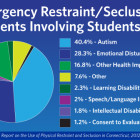
Children with autism were the most frequently subjected to restraint or seclusion in Connecticut schools in the 2012-13 school year, according to a new state report that tallied more than 33,000 incidents of physical restraint or seclusion in public schools and private special education programs.

The report from the state Department of Education shows that autism was the primary disability among special education students subject to “emergency” restraint or seclusion, with 40.4 percent of all such incidents involving a child with autism. Autism also accounted for nearly half of all cases in which children were put in seclusion as part of their individualized education plans, or IEPs. The report shows a slight decline from the previous year in the overall number of students restrained or secluded, and a drop in reports of injuries – from 840 in 2011-12, to 378 last year. But the number of serious injuries rose from eight to 10, and more than 900 reported episodes of seclusion or restraint lasted more than an hour. “This is just so disheartening,” said Shannon Knall of Simsbury, policy chair of the Connecticut chapter of Autism Speaks, an advocacy group.

Over-The-Counter Drugs: A Prescription For Confusion

At Able Care Pharmacy & Medical Supplies in Enfield, Ashraf Moustafa often tries to avert disasters involving drugs displayed on his store’s shelves. Moustafa, the pharmacy manager, recently spoke to an elderly woman seeking ways to treat dark blue patches on her arms. Instead of suggesting any remedies, he asked the woman what medicines she was taking and discovered that she was dangerously mixing over-the-counter anti-inflammatory drugs with aspirin and the prescription blood thinner, Plavix. He sent the woman to the hospital, fearing that she was suffering from internal bleeding. “People have the impression that if a drug is approved for over-the-counter use, then it must be much safer than prescription medicine,” Moustafa says. “That’s when trouble happens.”

Many consumers mistakenly assume that over-the-counter drugs can do no harm.

More Action On Child Care: State And In-home Providers Reach Agreement

The state and the recently formed union representing family child care providers in the Connecticut Care 4 Kids program announced an agreement Thursday that will provide for professional development and wage increases. The agreement came after nine months of negotiations between the two parties. Family child care providers who provide in-home care will undergo a four-hour orientation program that will include specialized trainings and information on the quality-enhancement programs offered by the Office of Early Childhood, the governor’s office said. Also, the state will offer incentives for license-exempt providers who seek state licensure, through a one-time, $500 bonus for maintaining their license status. The state now has hundreds of unlicensed family day care providers.

Child Care Licensing Oversight Lacks Consistency, Report Finds

A consultants’ review of Connecticut’s child care licensing system recommends that the state boost training for providers and eliminate inconsistencies in the way inspectors interpret and apply regulations. The report by the National Association for Regulatory Administration (NARA), a professional organization with expertise in human-service regulation, found that “inter-rater reliability” in Connecticut’s child care licensing program was very low, meaning that inspectors do not interpret or apply regulations the same way. It also found significant lapses in training for child care providers. “Many providers, especially those who operate family homes, are forced to choose between training and profitable operation,” says the report, commissioned by the Connecticut Office of Early Childhood (OEC), in conjunction with the Department of Public Health (DPH). The review, released this week, recommends that the state develop a policy and procedure manual that specifies how inspections will be conducted and regulations applied; train DPH staff in inspection standards; and offer “targeted, low-cost training” for providers.