Derby Pain Clinic’s High Prescribing Of Cancer Drug Extends Beyond Nurse

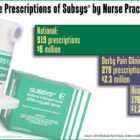
Four nurses, all of them affiliated with a Derby pain clinic, were responsible for nearly all of the state’s 2014 Medicare spending on the powerful opioid painkiller Subsys, which is at the center of a kickback probe. New Medicare data for 2014 show the four nurses, all who worked at the Comprehensive Pain and Headache Treatment Center of Derby, were responsible for 279 claims for Subsys, at a cost of $2.3 million. The highest prescriber was Heather Alfonso, an advanced practice registered nurse (APRN) formerly employed by the clinic who is awaiting sentencing on charges she took kickbacks from Arizona-based Insys Therapeutics for dispensing Subsys to patients. The new data is the first indication that the propensity to prescribe Subsys extended beyond Alfonso, to other clinic staff. None of the other three nurses has been implicated in an ongoing federal probe of Insys’ marketing of Subsys that resulted in the criminal charges against Alfonso.

Disclosure Rules Don’t Stem Flow Of Pharma Cash To State’s Doctors

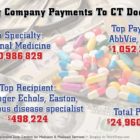
Dozens of Connecticut doctors accepted six-figure payments from drug and medical device manufacturers in 2015 for consulting, speaking, meals and travel, with six of the 10 highest-paid physicians affiliated with academic institutions, new federal data show. The top 10 doctors – less than 0.1 percent of the 11,000 who received payments – took in $3.6 million, or nearly 15 percent of the total $24.9 million paid out. Among them is the dean of the Yale School of Medicine, Dr. Robert Alpern, who received $445,398 in 2015 from two companies – Abbott Laboratories and AbbVie – in consulting fees, meals and travel expenses for serving on the boards of both companies. In 2014, he received $458,194 from the two companies. The Yale medical school began a research partnership with AbbVie in 2013, after the pharmaceutical company spun off from Abbott Laboratories.

CDC Data Show High Incidence Of Foodborne Illness Outbreaks In State

Connecticut had the highest total number of foodborne illness outbreaks in New England from 2005 to 2014, according to federal data – a distinction that experts say is fueled by better reporting, while higher rates of certain pathogens also may contribute. An analysis of data from the Centers for Disease Control and Prevention (CDC) show that Connecticut had 2,259 cases of foodborne illness in 154 single-state outbreaks in that 10-year period. For five of those years, Connecticut reported more single-state outbreaks than any other New England state. For eight years, its outbreak count exceeded that of its more populous neighbor, Massachusetts. And for nine of those years, it topped New Jersey.

Antipsychotic Use On The Decline In State Nursing Homes

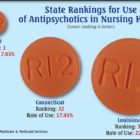
Connecticut still ranks high among states in the use of antipsychotic drugs for elderly nursing home residents, but its rate of use has dropped 33 percent since 2011 – a bigger decline than the national average — new government data show. The data released in June by the Centers for Medicare & Medicaid Services (CMS), show that nursing home residents in Connecticut, many with dementia, are still more likely to be given antipsychotics than their counterparts in 31 other states. But the state’s usage has fallen in the last 4 ½ years at a greater rate than the average drop of 27 percent, and it is now about the same as the national average — 17.4 percent. That’s down from 26 percent in 2011. CMS has been working with states for the past five years to address the overuse of antipsychotic medications in nursing homes.

Six Things To Know About Ticks And Lyme Disease

This year 97 percent of blacklegged ticks, commonly known as deer ticks, survived the Connecticut winter and are hungry for blood as temperatures warm. These arachnids transmit bacteria that cause Lyme disease and are likely thriving in your backyard, according to Connecticut Chief Entomologist Kirby Stafford. About 3,000 cases of Lyme disease are reported in the state each year, the state Department of Public Health reports, but Stafford says that most cases aren’t reported. The true number is closer to 35,000, he estimates. “Under-reporting is more likely to occur in highly endemic [widespread] areas, whereas over-reporting is more likely to occur in non-endemic areas,” according to the Centers for Disease Control and Prevention.

Unapproved Drugs Prompt FDA Alert To 5 Connecticut Doctors

Five Connecticut physicians have received letters from the U.S. Food and Drug Administration (FDA) alleging that they may have purchased unapproved drugs that put patients at risk of adverse health consequences, documents obtained by C-HIT show. The FDA documents show the five doctors were alerted as part of a wide-reaching federal probe involving Gallant Pharma International Inc., which sold more than $12.4 million in unapproved chemotherapy and injectable cosmetic drugs in the United States before the government shut down the operation in 2013. The letters to the doctors, dated April 1, 2015, say that “In addition to putting patients at risk, receiving misbranded or adulterated drugs and devices in interstate commerce and delivering or offering to deliver those drugs and devices to (or use on) others violates federal law.”

None of the doctors has been charged with wrongdoing, and only one acknowledged receiving the letter from the FDA. The case comes to light as drug companies and pharmacies are urging Congress and law enforcement officials to crack down on an increasing number of dangerous unapproved and counterfeit drugs being sold to doctors and consumers nationwide. Sales of counterfeit drugs and drugs not approved by FDA have soared into a multi-billion dollar industry with the growth of the Internet, and drug companies say efforts by governments to tackle illegal online drug sales are not sufficient.

Report: Private Insurers Deny More Claims For Mental Health Care

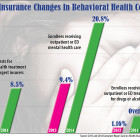
The rate of denials by the state’s largest managed care insurers of requests for mental health services rose nearly 70 percent between 2013 and 2014, with an average of about one in 12 requests for prescribed treatment initially rejected, a new state report shows. At the same time, the proportion of enrollees in the largest managed care companies who received outpatient or emergency department care for mental health doubled, from an average of 9.4 percent in 2013 to 20.8 percent in 2014, according to an analysis of the 2015 Consumer Report Card on Health Insurance Carriers in Connecticut, issued by the state Insurance Department. The percentage of members who received inpatient mental health care also doubled, although it remained low, with most companies providing inpatient services for less than .5 percent of all enrollees. The rise in rejections by the state’s 10 largest indemnity managed care companies – private health insurers, not including Medicare or Medicaid — came as state officials focused on improving mental health outreach and treatment, in the wake of the Sandy Hook school shooting in December 2012. The managed care organizations include companies such as Aetna Life Insurance Co., Anthem Health Plans, CIGNA Health and Life Insurance Co., and UnitedHealthcare Insurance Co.