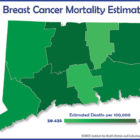
Risk Of Death In Connecticut Linked To Where You Live

Connecticut has seen significant reductions in deaths from breast and colon cancer in the last three decades, but the state exceeds the national mortality rate for uterine cancer and three other cancers, as well as for mental health and substance use disorders. An analysis of data compiled by the Institute for Health Metrics and Evaluation at the University of Washington, published in JAMA, also shows wide disparities between Connecticut counties in death rates from certain cancers and other illnesses. Windham County had the highest mortality rates for seven of 10 cancers identified in the study as having the highest disease burden or responsiveness to screening and treatment, including pancreatic, uterine and lung cancer. Tolland County, meanwhile, had the lowest death rates for five cancers, including breast cancer, while Fairfield County was lowest for four. Similarly, deaths from chronic respiratory diseases in Windham County were nearly double the rate in Fairfield County – 63.13 per 100,000, compared to 34.15.
The Dope On Cannabis: Five Things To Know

Is marijuana a harmless way to relax or a dangerous gateway drug? The science says “No” and “We don’t know,” respectively. Arguments for and against legalization often misrepresent the medical effects of cannabis, some experts say. Several bills proposed in the 2017 session of the General Assembly would make recreational use of marijuana legal in Connecticut. Medical marijuana use for conditions ranging from post-traumatic stress disorder to cancer has been legal in the state since 2012, though dispensaries did not open until 2014.

Pediatric Psychiatric Cases Continue Climbing, Swamping ERs

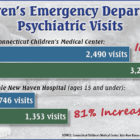
The state’s efforts to direct children in mental health crisis away from emergency rooms, to other services, have fallen short, with major hospitals reporting staggering increases in patient visits since 2013: Up 32 percent at Connecticut Children’s Medical Center, and 81 percent at Yale New Haven Hospital. The children’s hospital (CCMC) reported nearly 3,300 visits last year – 275 a month, on average — with the average length of stay increasing to 15 hours from less than 12 in 2013. “I wish I could say we had made a lot of progress, but we haven’t,” said Dr. Steve Rogers, medical director of the emergency department’s (ED’s) behavioral health unit. “Unfortunately, I think it’s only going to keep trending this way.”

Similarly, Yale saw ED visits by children ages 15 and younger rise from fewer than 750 in 2013 to more than 1,350 in 2016 — and the numbers are running even higher this year, said Dr. Claudia Moreno, medical director for psychiatric emergencies in Yale’s children’s emergency department. At times, she said, all ED beds are full, and children wait on hallway gurneys.

Proposed Bill Would End ‘Custody For Care’

State officials and parent advocates gave different versions Tuesday of how often, and why, the Department of Children and Families (DCF) takes custody of children with severe behavioral health problems – and whether the practice should continue. Advocates, including a group of adoptive parents, told the legislature’s Committee on Children that a proposed bill that would prohibit DCF from “requesting, recommending or requiring” that parents relinquish their custodial rights when seeking mental health treatment for their children is needed to stop a practice known as ‘trading custody for care.’ The bill, drafted by state Rep. Rosa Rebimbas, R-Naugatuck, was prompted by an October C-HIT story that described DCF’s use of “uncared for” custody petitions against parents who could not manage their children at home and insisted on specialized residential care. In testimony Tuesday, DCF Commissioner Joette Katz said the agency resorts to taking over custody only in rare cases in which parents refuse to take their children home from inpatient settings or “will not cooperate” with clinician-recommended in-home or community-based treatment services. “We disagree with the notion that DCF requires parents to completely relinquish custody of their children” to receive suitable behavioral health care, Katz said. She acknowledged that the agency has sharply reduced the number of children it places in residential treatment.

Derby Nurse’s Sentencing Delayed Until July

A federal judge has agreed to a six-month delay in sentencing a Derby nurse who pleaded guilty to accepting kickbacks in exchange for prescribing a powerful opioid painkiller because she is cooperating in “numerous ongoing criminal investigations,” according to court records. U.S. District Judge Michael Shea approved a Jan. 17 agreement between federal prosecutors and attorneys for Heather Alfonso that delays her sentencing another six months, until July 2017. Alfonso was charged in June 2015 with accepting $83,000 in kickbacks from Insys Therapeutics in exchange for her high prescribing of the drug Subsys. In arguing for the new sentencing delay, the U.S. attorney’s office in Connecticut said Alfonso “continues to cooperate in (investigations in) several federal and state jurisdictions, including the District of Connecticut.” A previous story by C-HIT reported on prior sentencing delays because she was cooperating in an ongoing federal probe.

New Strain On State Nursing Homes: Keep Patients Out Of Hospitals

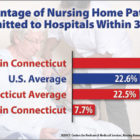
At the Fresh River Healthcare nursing home in East Windsor, the chance that a short-stay patient will end up back in the hospital within 30 days of arriving at the facility is less than eight percent. Meanwhile, 12 miles away at the Greensprings Healthcare and Rehabilitation nursing home in East Hartford, more than a third of patients who came from hospitals will be readmitted in 30 days. The wide swing in nursing home patients’ re-hospitalization rates has a lot to do with the condition patients are in when they are discharged from inpatient stays, as well as the planning that goes into the transition to other care. The federal government has been penalizing hospitals since 2012 for high rates of patients returning within 30 days of discharge. But now, nursing homes (or skilled nursing facilities) also are being held accountable for hospital readmissions.

FBI Reaches Out For Victims Of Subsys Scheme

In an unusual move, the FBI is reaching out publicly to patients who were prescribed the powerful narcotic medication Subsys, which federal agents allege was improperly dispensed by practitioners across the country, including a nurse in Derby. In a posting on its Victim Assistance Program website, the FBI asks people who were prescribed Subsys between March 2012 and December 2016 to complete a brief questionnaire that will assist in a federal probe of Insys Therapeutics, the company that makes Subsys. The appeal follows the indictments in December of six top executives and managers of Insys on charges they led a nationwide conspiracy to bribe doctors and nurses to prescribe Subsys, which is approved for treating cancer patients suffering episodes of breakthrough pain. In exchange for bribes and kickbacks, the practitioners wrote large numbers of prescriptions for patients, most of whom were not diagnosed with cancer, the indictments allege. One of the practitioners named in the indictments is Heather Alfonso, formerly an advanced practice registered nurse (APRN) at the Comprehensive Pain and Headache Treatment Center in Derby. She has pleaded guilty to accepting kickbacks from Insys through a sham “speakers’ program,” in exchange for prescribing Subsys.

14 Hospitals Penalized For Infection Rates, Injuries

Nearly half of Connecticut hospitals – 14 out of 31 – will lose a portion of their Medicare payments in 2017 as a penalty for having too many patients who acquired preventable infections and injuries while hospitalized. The hospitals are among 769 nationwide that will lose one percent of their Medicare reimbursements this year as part of the Centers for Medicare and Medicaid Services’ (CMS) Hospital-Acquired Condition Reduction Program. The CMS program, now in its third year, penalizes the lowest-performing hospitals where a relatively high number of patients got infections from hysterectomies, colon surgeries, urinary tract catheters and central line tubes. It also takes into account patients who suffered from blood clots, bed sores or falls while hospitalized. New this year, CMS also factored in the incidents where antibiotic-resistant bacteria – namely, methicillin-resistant staphylococcus aureus (MRSA) and Clostridium difficile (C.

OSHA Penalties Drop Nearly 50 Percent In Five Years

Penalties levied against Connecticut companies for violations of occupational safety rules dropped by more than half between 2011 and 2015, and the number of cases with penalties fell by 40 percent in the same time period, according to a C-HIT analysis of federal Occupational Safety & Health Administration (OSHA) data. Data from the agency’s offices in Bridgeport and Hartford show initial penalties against Connecticut employers totaled $10.86 million in 2011 and dropped to $5.07 million in 2015. Companies were able to negotiate settlements, lowering penalty payments to $6.26 million in 2011, and $3.51 million in 2015. For the first nine months of 2016, the downward trends in cases and fines are continuing, the data show. Reasons for the declines vary: Government officials point to safer workplaces and more compliance with regulations.