State’s Dialysis Centers Rate High, With Some Exceptions, New Data Show

Five dialysis facilities in Connecticut received low quality-of-care scores under a new Medicare rating system, including one center cited for a high death rate, while 11 facilities received the highest rating possible, federal data show. Connecticut has 45 dialysis facilities in the Medicare program, all but four of them for-profit. Of the 41 for-profit centers, the majority are owned by two chains – DaVita, which has 24, and Fresenius Medical Care, with 13. Medicare began rating dialysis facilities earlier this year on a scale of one to five stars, based on nine measures of quality of care. The measures include mortality and hospitalization rates of patients, as well as rates of hypercalcemia, catherization of more than 90 days, and the percentage of dialysis patients who had enough wastes removed from their blood during dialysis.


Drug Company Tied To Connecticut Nurse Settles Kickback Case In Oregon

The company alleged to have paid kickbacks to a Derby nurse in exchange for her prescribing of a potent pain medication has agreed to pay $1.1 million to settle a case brought by the state of Oregon, which accused the firm of deceptive marketing and kickback payments involving the same drug. In a notice of unlawful trade practices filed against the Arizona-based drug maker Insys, the Oregon attorney general’s office charged that the company used an “unconscionable tactic by making payments to doctors that you intended to be a kickback to incentivize the doctor to prescribe Subsys.” The attorney general also charged Insys with using “unconscionable, false and deceptive sales tactics” designed to increase the “off-label” use of Subsys, which is approved only to treat breakthrough cancer pain. The case in Oregon comes as Connecticut nurse practitioner Heather Alfonso, formerly with the Comprehensive Pain and Headache Treatment Center in Derby, awaits sentencing on charges she received $83,000 in kickbacks from Insys from 2013 to 2015. In pleading guilty, Alfonso, 42, admitted that the money she was paid for attending “dinner programs” as a speaker — many of them sham dinners, with just an Insys sales representative or her friends or co-workers — influenced her prescribing of the drug, according to the U.S. Attorney’s Office for Connecticut. The charge of receipt of kickbacks in relation to a federal healthcare program carries a maximum term of imprisonment of five years and a fine of up to $250,000.

More Than 90 Percent Of CT Hospitals Face Readmissions Penalties

All but one of Connecticut’s acute-care hospitals will lose Medicare reimbursement in 2015-16 as a penalty for high readmissions of discharged patients, new federal data show. The penalties against 28 hospitals mean Connecticut has one of the highest percentages nationally – more than 90 percent — of hospitals facing Medicare reductions. Only the Hebrew Home and Hospital of West Hartford escaped penalties; the Connecticut Children’s Medical Center is exempted from the federal program. None of the state’s hospitals faces the maximum 3 percent reduction to Medicare reimbursement, but seven face reductions of more than 1 percent. They are: Milford Hospital (1.70 percent); Middlesex, in Middletown (1.38); Johnson Memorial, in Stafford Springs (1.27); Charlotte Hungerford, in Torrington (1.19); St.

Early Childhood Health Targeted As Path To Better Education

Experts are focusing more money and attention on the health of young children in Connecticut in an effort to prepare them to be successful in school later on. The efforts include developmental screenings at child care centers, home visits and information hotlines for parents, better collaboration with pediatricians and more support for preschool staff members dealing with emotional and behavioral issues. The idea is that if a child’s basic health needs aren’t met, he or she won’t be able to keep up with academic and social expectations in school. “There’s been a huge interest in addressing early childhood development with the understanding that’s where we get the most bang for the buck,” said Lisa Honigfeld, the vice president for health initiatives at The Child Health and Development Institute of Connecticut. In the last 10 years, there has been “an explosion” of federal funding for early childhood initiatives to get children on track early and prevent spending on remediation down the road, Honigfeld said.

Derby Pain Clinic Terminated From Medicaid Program

The state has barred practitioners at a Derby pain clinic, including a high-prescribing nurse, from participating in the Medicaid program because of improprieties in treatment and oversight. Documents from the Department of Social Services (DSS) show the physician heading the clinic, Dr. Mark Thimineur, and four nurses and assistants were notified in July that their participation in the Connecticut Medical Assistance Program, which includes Medicaid, is being terminated on Aug. 30. Those terminations came after Heather Alfonso, an advanced practice registered nurse (APRN) at the privately run Comprehensive Pain & Headache Treatment Centers, was removed from the Medicaid program in May, DSS officials said. Alfonso was identified in a February story by C-HIT as among the top 10 prescribers nationally of the most potent controlled substances in Medicare’s drug program in 2012 — Schedule II drugs, which have a high potential for addiction and abuse.

Post-Charleston: Debunking NRA’s Rhetoric

After the horrible Charleston church slaughter last month, the public response from the National Rifle Association mostly came from long-time board member Charles L. Cotton. The nine African Americans were shot and killed after they welcomed a killer into their Bible study because, said Cotton, their church pastor, South Carolina Sen. Clementa Pinckney, did not allow guns at his church. Earlier, Pinckney, who was among the victims, had voted against a concealed carry law in his state. “Eight of his church members, who might be alive if he had expressly allowed members to carry handguns in church, are dead,” said Cotton in an online forum. “Innocent people died because of his political position on the issue.”

Highest Prescribers Of Cancer Drug Paid As Speakers

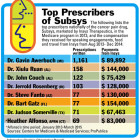
Eight of the top 10 prescribers of a potent narcotic used for cancer pain were paid more than $870,000 in speaking fees by the drug maker in 2013 and 2014 — indicating that Derby nurse Heather Alfonso was not the only high prescriber compensated by the company. Alfonso, an advanced practice registered nurse (APRN) who worked at the Comprehensive Pain and Headache Treatment Center in Derby, pleaded guilty last month to accepting $83,000 in kickbacks from 2013 to March 2015 from the drug company Insys Therapeutics, which has heavily marketed a painkiller called Subsys, a sublingual fentanyl spray approved only for cancer patients. Alfonso was paid to speak about Subsys at more than 70 “dinner programs,” but most of those programs were attended only by her and a sales representative for Insys, or by Alfonso’s colleagues and friends who had no authority to prescribe the drug, according to the U.S. Attorney’s Office for Connecticut. Alfonso faces a maximum prison term of five years and a fine of up to $250,000 on the charge of receiving kickbacks in connection with a federal healthcare program. In pleading guilty, she admitted that the money she was paid influenced her prescribing of Subsys, often to non-cancer patients, federal investigators said.

Can The FDA Adequately Police Generics?

As the federal government advocates increased use of generic drugs, concerns are mounting about the U.S. Food and Drug Administration’s oversight and the quality or effectiveness of some generics. In the last eight months, the FDA has acknowledged that two generic versions of the attention-deficit/hyperactivity disorder drug Concerta it approved may not work as effectively as the brand-name product. The agency told the drugs’ manufacturers to confirm their effectiveness or withdraw them from the market. The FDA also is looking into findings by a researcher at Boston’s Brigham and Women’s Hospital that generic versions of Pfizer’s cholesterol-lowering drug Lipitor manufactured outside of the U.S. contains impurities that inhibit the drug’s therapeutic effect. The FDA said that, as a number of popular drugs come off patent through 2015, it lacks the resources to independently police generics.

Meriden Family Sues Nurse For “Potentially Deadly” Prescribing

The family of a Meriden man who died in 2013 at age 56 is suing Derby nurse practitioner Heather Alfonso and the pain clinic where she worked, alleging that her rampant overprescribing of narcotics contributed to his death. Joseph Torchia’s wife and son claim in a lawsuit filed in Waterbury Superior Court that Alfonso, who was recently charged by federal prosecutors with accepting kickbacks from a drug company, prescribed “unlawfully high” doses of narcotics to Torchia for more than a year, ignoring signs that he was suffering from liver cirrhosis, gallbladder disease, internal bleeding and narcotics’ dependency. The suit alleges that Alfonso’s reckless prescribing weakened Torchia’s medical condition, so that his ability to recover from gallbladder surgery on Jan. 14, 2013, was compromised. He died three weeks after that surgery.

Case Against Derby Nurse Involves Potent Painkiller

Federal charges against Derby nurse Heather Alfonso center on a powerful and addictive painkiller called Subsys, which has been heavily marketed by the Arizona-based manufacturer Insys Therapeutics, federal officials confirmed Wednesday. Alfonso, 42, of Middlebury, pleaded guilty Tuesday in U.S. District Court in Hartford to receiving $83,000 in kickbacks from January 2013 until March 2015 from a pharmaceutical company that makes a drug used to treat cancer pain. In pleading guilty, Alfonso admitted that the money she was paid influenced her prescribing of the drug, according to the U.S. Attorney’s Office for Connecticut, which is prosecuting the case. Receiving kickbacks in exchange for billing charges to a federal health care program is illegal. While the company and drug are not named in the indictment, a prosecutor revealed in court Tuesday that the case involves Subsys and Insys Therapeutics.