Inspection Reports: Hospitals Cited For Testing Error That Resulted In Unnecessary Surgery, Patient Deaths, Failure To Investigate Complaint Of Patient Abuse

A hysterectomy performed on a patient based on a faulty test result, and the death of two patients after failing to receive necessary monitoring or medication, failure to immediately investigate a complaint of patient abuse by a doctor, were among the incidents cited in the latest round of hospital inspection reports conducted by the state Department of Public Health (DPH). The 24 new reports cover state inspections that took place at hospitals last year and earlier this year. At Bridgeport Hospital, a patient underwent a total hysterectomy after her biopsy results were contaminated by another patient’s. The patient had a hysteroscopy procedure on Dec. 3, 2018, during which a biopsy was taken.
Most OB-GYN Practices Fall Short In Caring For Women With Disabilities

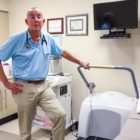
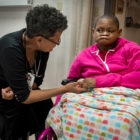
Over the past 20 years, Connecticut women with cognitive or physical disabilities have found their way to the Gaylord Specialty Healthcare’s Gynecological Clinic for Women with Disabilities in Wallingford. There, obstetrician-gynecologist (ob-gyn) Anna Tirado provides routine and preventive gynecological care to disabled women. Now nearing retirement age, Tirado isn’t sure what will happen when she no longer sees patients. “I am very worried. The patients are not going to be easily absorbed into a private practice,” she said.

Opioids Backlash Leaves Some Struggling With Chronic Pain

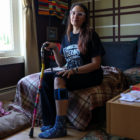
Unable to obtain morphine, Heather Weise, 50, lay balled up in pain at her home in Milford earlier this year. It took nine days to refill her narcotic painkiller and she blamed the clampdown on opioid prescriptions for her woes. “My pain’s up there with cancer,” said Weise, an administrative assistant at the sandwich-chain Subway. “I almost ended up at the ER.”

Weise suffers from adhesive arachnoiditis, an inflammation of membranes surrounding the brain and the spinal cord, for which she was prescribed a daily dose of 120 milligrams of the opioid painkiller morphine. When her prescription ran out in the stipulated 30 days for refills, she had nowhere to turn to for relief.

Growing Opioid Crisis Tests Limits Of Methadone Clinics; Advocates Favor Expansion

Jose DeJesus pulls his silver minivan out of a parking lot in back of a row of historic houses on New Haven’s Congress Avenue. He points with pride to the flowers he planted around the lot. Then he grimly spins a commentary as he gives a tour of the surrounding Hill neighborhood. • There’s the John C. Daniels School, where parents are dropping off kids and where a man overdosed and died near a rear stairwell over the summer. • Across the street, there’s the APT Foundation clinic, where clients in recovery from opioid use come every morning for methadone.

Dead Fish, Condoms, Brown Foam: Sewage Has Chokehold On Black Rock Harbor

On April 25, 2018, Patrick Clough walked onto a dock at Fayerweather Yacht Club on Black Rock Harbor in western Bridgeport. He looked down. Swirling around the dock was a brown, foamy slick. Women’s sanitary products and other objects floated in it. He posted a photo of the discharge on two Black Rock neighborhood Facebook pages, writing “This is disgusting.”

A week before Clough captured that photo, equipment malfunctioned at the Bridgeport West Side Water Pollution Control Facility.

Cost Of Modernizing Century-Old Infrastructure Means Foul Spills At Black Rock Harbor Will Go On For Decades

On the west and east sides of narrow Black Rock Harbor in western Bridgeport, industry, school, recreation and sewage treatment converge. At the most inland tip are Santa Energy’s oil tanks. On the east side stretch asphalt runways at Pratt & Whitney’s test airport and a city landfill. On the west side stand O & G Industries sand and stone yard, an empty industrial building, a city landfill, a trash-to-energy plant, the regional aquaculture high school, a seaport, shops, a restaurant and sailing teams’ docks. Last on this list is the Bridgeport West Side Water Pollution Control Facility, the city’s largest sewage treatment plant, which began work this year on a 20-year plan to correct chronic overflows.

Citizen Scientists Steer Efforts To Jumpstart Black Rock Harbor’s Recovery

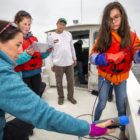
At 6:25 a.m. on the cloudy, humid first day of summer, two teenage aquaculture students huddle at the back of their school boat as it backs away from a dock in Black Rock Harbor in western Bridgeport. Charlotte Hickey grips a heavy cylindrical metal probe that is about a foot and a half long. The students call this “the beast.” It contains electronics that precisely measure water conditions. Sienna Matregrano holds a clipboard and pen, ready to record depth, temperature, salinity, dissolved oxygen, fluorescence and turbidity. Both girls are seniors at Bridgeport Regional Vocational Aquaculture School.

Coordinated Care Practices Help Keep HUSKY Members Out Of ERs

HUSKY members in a person-centered medical home (PCMH) practice are more likely to get recommended preventative health services and less likely to visit the emergency room, according to Department of Social Services (DSS) data. A PCMH is a medical practice that provides comprehensive and coordinated care. That can mean helping a child get an appointment with a behavioral health clinician; making sure a patient’s apartment is free of asthma triggers; and many other services hard to get in time-crunched primary care offices. Medical homes must also provide a high level of accessibility through measures like extended hours, electronic or telephone access or rapid appointment scheduling. The state instituted HUSKY PCMHs in 2012 with an eye toward improving care for patients with chronic conditions, according to Kate McEvoy, director of the Division of Health Services at DSS.

Blacks, Poor At Higher Risk Of Heart Disease; Overall Death Rate Falls

The death rate from heart disease plummeted nationally over several decades for all racial and ethnic groups, but the rate of decline has slowed slightly and African Americans and low-income individuals are still at a higher risk of developing the disease and dying from it, according to a report from the National Center for Health Statistics. The report isn’t surprising to Dr. Edward Schuster, medical director, Stamford Health Cardiac Rehabilitation Program.  “In the United States, there’s a lot of talk about income disparity, which is a political hotcake,” Schuster said. “But what we are seeing is a life expectancy disparity. According to a recent Journal of American Medical Association, if you’re a man in the top 1 percent of income, you can expect to live 13 years longer than someone in the 1 percent at the bottom.”

Heart disease is largely preventable by maintaining a balanced diet, a healthy weight and moderate exercise, with only 20 percent of cases involving genetics, said Dr. David L. Katz, who heads the Yale-Griffin Prevention Research Center, which works with communities to develop programs to control chronic diseases. But significant groups in lower income and urban areas don’t—or can’t—act on the message, Katz said.

Prescription Opioids Targeted Connecticut’s Most Vulnerable Citizens

In 2018, Dean and Paula Palozej found their son, Spencer, on the floor of his home in Manchester.  Spencer was one day shy of his 30th birthday and he was found dead of a fentanyl overdose. Spencer, who worked as a landscaper, started taking oxycodone for pain after two surgeries in his early 20s. A friend told his father that he took a fentanyl pill thinking it was oxycodone. Palozej unloaded on the pharmaceutical industry, which is blamed by many for the explosion in prescription opioid use and abuse nationwide over the past two decades. “I’m disgusted with what they did—the greed they had,” he said.