Number Of Lead-Poisoned Children Drops, But More Showed Higher Levels

Nearly 1,400 new cases of lead-poisoned children under age 6 were reported in Connecticut in 2015, a slight drop from the year before, but more children showed higher levels of poisoning. A child whose blood test shows 5 micrograms of lead per deciliter or higher is considered poisoned. The 2015 numbers show 98 new cases of children with lead levels of 20 micrograms or higher, four times the threshold number and a 32 percent jump from 2014. “We cannot, with any certainty, explain why this is the case,” said Krista M. Veneziano, coordinator of the Connecticut Department of Public Health’s (DPH’s) Lead, Radon, and Healthy Homes Program, about the disproportionately larger numbers of higher toxicity. Exposure to lead can damage cognitive ability, including a measurable and irreversible loss in IQ points.
Independent Living Facility Fined After Resident Was Found Dead In Pond

State health officials have fined a Willington independent living facility $1,500 after a resident left the facility last fall and was found dead in a nearby pond several days later. In addition to the fine, High Chase LLC agreed in a consent order with the state Department of Public Health (DPH) to implement new policies and procedures for staff to follow when a resident goes missing. The facility’s licensee denied the DPH’s allegations, but signed the order without any formal challenge of the allegations. Officials at High Chase did not return calls seeking comment this week. The fine and consent order stem from an incident discovered during a December 2016 inspection.

Four Nursing Homes Fined

The state Department of Public Health (DPH) has cited and fined four Connecticut nursing homes for various lapses of care. Bridgeport Manor was fined $1,940 for two instances earlier this year. In a Jan. 14 incident, a nurse aide found a resident slumped in a wheelchair with the wheelchair safety belt around the neck. According to the citation, the resident’s head and neck were on the seat of the wheelchair, the wheelchair’s seatbelt was choking the resident and the resident’s lips were turning blue.

Med Board Fines Doc For Improper Opioid Prescribing; Another For Stealing Drugs

The state Medical Examining Board Tuesday disciplined a Fairfield pulmonologist for improperly prescribing opioids and a former UConn Health doctor who had stolen medication from the health center for his private practice. Dr. Igal Staw, who works at Respiratory Associates in Fairfield, was reprimanded, fined $7,500 and has been permanently restricted from prescribing opioids, under a consent order he agreed to. He also must hire a supervisor to monitor his drug prescriptions and will be placed on two years of probation if his state registration to prescribe controlled substances is ever reinstated, the order said. In 2012 and 2013, Staw prescribed opioids to eight patients with chronic pain, including some who may have been abusing the medicine, the order said. He also failed to document the reasons for the prescriptions or justify in the patients’ medical charts why he was increasing the doses, state records show.

Risk Of Death In Connecticut Linked To Where You Live

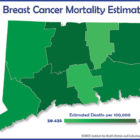
Connecticut has seen significant reductions in deaths from breast and colon cancer in the last three decades, but the state exceeds the national mortality rate for uterine cancer and three other cancers, as well as for mental health and substance use disorders. An analysis of data compiled by the Institute for Health Metrics and Evaluation at the University of Washington, published in JAMA, also shows wide disparities between Connecticut counties in death rates from certain cancers and other illnesses. Windham County had the highest mortality rates for seven of 10 cancers identified in the study as having the highest disease burden or responsiveness to screening and treatment, including pancreatic, uterine and lung cancer. Tolland County, meanwhile, had the lowest death rates for five cancers, including breast cancer, while Fairfield County was lowest for four. Similarly, deaths from chronic respiratory diseases in Windham County were nearly double the rate in Fairfield County – 63.13 per 100,000, compared to 34.15.

DPH Fines Three Nursing Homes Following Lapses In Care

The state has cited and fined three nursing homes for various violations, including mismanagement of medication. The state Department of Public Health fined Apple Rehab Rocky Hill $3,000 for seven incidents. One incident on Oct. 27, 2016, involved a resident’s hospitalization for an uncontrolled nosebleed. DPH found staff had mismanaged the resident’s anticoagulant medication prescriptions.

Menopause Puts Women At Higher Risk Of Fall-Related Injuries

A growing number of women are getting hurt by falling, and they are much more likely to suffer fall-related injuries than men, data show. From 2011 to 2014, 51 women per 1,000 population were hurt in falls, up from 47 per 1,000 from 2005 to 2008, according to recent data from the National Center for Health Statistics and the Centers for Disease Control and Prevention (CDC). Falls were the most common cause of nonfatal injuries to women, the report found, and significantly outpaced injuries from overexertion, the second leading cause of injury that afflicted just 14 per 1,000.  

Hormone-related changes associated with menopause are the main reasons women are so prone to falling, especially as they age, said Dr. Karen Sutton, an orthopaedic surgeon, director of Women’s Sports Medicine at Yale New Haven Hospital, and associate professor of orthopaedics and rehabilitation at the Yale School of Medicine. “Their muscles are weaker, their bones are weaker,” she said, since hormone changes lead to reduced bone mass and the onset of osteoporosis in many women.

Five Nursing Homes Fined

The state Department of Public Health has fined five nursing homes for various violations, including two in which residents went missing. Blair Manor in Enfield was fined $3,000 after a resident with dementia and neurocognitive disorder left the facility. Staff noticed the resident was missing around 7:20 p.m. on Oct. 4, 2016. According to the Department of Public Health (DPH) citation, earlier that day five staff members separately witnessed the resident saying he was going to leave the facility and packing his belongings, but none reported it to their supervisors.

State Disciplines Six Nurses

The state Board of Examiners for Nursing disciplined six nurses this week, including several cases of nurses who abused drugs or alcohol. On Wednesday, the board revoked the license of Michelle Murphy, a registered nurse from Longmeadow, Massachusetts, for violating an earlier probation by not submitting drug test results to the state Department of Public Health, records show. In April, the board had placed her on probation for two years based on findings that she took the painkillers fentanyl and Dilaudid for her own use and abused controlled substances to excess, records show. The board also revoked the license of licensed practical nurse Adam Burr of New Britain, who was intoxicated while working for PSA Healthcare of Plainville doing care in a patient’s home, state records show. The board found that Burr’s abuse of alcohol and an emotional disorder or mental illness he has suffered from since 2013 were affecting his ability to practice nursing.

Is Corrosive Groundwater Leaching Lead Into Your Well Water?

Connecticut is one of 11 states with a very high prevalence of potentially corrosive groundwater, increasing the risk that water running out of the taps of homes with private wells might be tainted with lead, a study conducted by the U.S. Geological Survey (USGS) found. USGS researchers analyzed nearly three decades of data from more than 20,000 public and private wells nationwide and determined that between 75.3 percent and 84.9 percent of wells in Connecticut could contain corrosive groundwater. If left untreated, corrosive groundwater can leach lead and other metals in pipes en route to the tap, raising health concerns for the estimated 871,000 state residents who rely on private wells as their primary source of drinking water. In Connecticut, the state does not mandate or conduct testing of well water, instead relying on private well owners to maintain, test and treat their own wells. Many well owners are not aware of the risks of corrosion, environmental health activists say.