Coping With Pandemic: Managing Fear

Fear of becoming infected with COVID-19 is reasonable – especially now with plans announced to start reopening Connecticut. There are things you can do to take precautions and be proactive and plan for your own safety. ConnHealthITeam · Coping With Pandemic: Manage Your Fear
C-HIT’s Colleen Shaddox talks with Rajita Sinha, Foundations Fund Professor in the Department of Psychiatry at Yale University and the founding director of the Yale Stress Center, about how to take control and manage fear during the pandemic.  



A Surge In COVID-19 Testing Needed Before Connecticut Can Reopen Safely

Leslie Radcliffe looks ahead to the planned reopening of Connecticut’s economy beginning on May 20 with a mix of hope and anxiety. Hope, because people in her working-class Hill neighborhood in New Haven will be able to return to work, but anxiety because she’s worried that the “reopening” won’t go smoothly. In particular, she is concerned about testing for coronavirus. Will there be enough testing so the disease won’t catch fire again and threaten the lives and livelihoods in her predominantly black and Latinx neighborhood? Radcliffe, an administrative assistant at Yale University, has been working from home, but last week she began driving her brother to his job at Costco.

Coping With Pandemic: Resurgence Of Guilt

Placing loved ones in a nursing home is often fraught with emotions, and a common one is guilt.  Many are feeling a resurgence of guilt now, knowing that they are at higher risk during this pandemic. Coronavirus has swept through 150 of the state’s nursing homes and, as of April 29, 1,249 residents have died — representing about 55% of all COVID-19 deaths.  As of last Thursday, there were 4,814 cases in nursing facilities. ConnHealthITeam · Coping With Pandemic: Guilt
Dr. Kirsten Wilkins, an associate professor of psychiatry at the Yale School of Medicine, talks with C-HIT’s Colleen Shaddox about strategies you can use to help your elderly relatives – and yourself – cope during the pandemic.

Children And Parents Feel The Strain Of Confinement

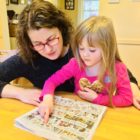
Weeks into staying home from preschool, Betty, 4, threw herself on the floor and had a screaming meltdown. She had had a Zoom meeting with her class earlier that day, and every little thing was setting her off. “We don’t accept screaming in our house,” said Betty’s mother, Laura Bower-Phipps, professor and coordinator of elementary education at Southern Connecticut State University in New Haven. “So, we counted the screams, and when she hit three, my wife and I told her she needed to take a break for four minutes.” Betty took the break, came back and screamed three more times, and again went to her quiet spot for another four minutes. And so, it went on.

Nursing Homes Prove To Be Ideal Breeding Ground For The Coronavirus Pandemic

As cases of COVID-19 surged throughout Connecticut and the nation, “a perfect storm” of circumstances rendered nursing homes unable to handle the crisis, hastening the virus’ spread and deaths, experts say. “It’s just kind of this perfect storm. It’s just the nature of the beast. This is the worst situation for a virus like this,” said Dr. David Hill, professor of medical science and director of global public health at Quinnipiac University Frank H. Netter MD School of Medicine. Indeed, nursing homes care for an extremely frail population, many with underlying health conditions.

Pandemic Exposes Stark Health Disparities Generations In The Making

Soon after Minerva Cuapio, a 48-year-old Mexican immigrant who lives in New Haven, was laid off from her job at a dry cleaner in March, she developed a headache, an itchy throat and a dry cough. Then came the shortness of breath that really worried her daughter, Izarelli Mendieta, 29, of New Haven. While trying to get her mother care, she said, they were bounced from a doctor to the state’s COVID-19 hotline to a telemedicine visit back to the hotline and then to a drive-through testing center and an emergency room visit. The family waited nine days for Cuapio’s positive test results. Izarelli’s father, Pedro Mendieta, 55, who lost a foot to diabetes, tested positive, too, but had mild symptoms.

Minerva Cuapio and Pedro Mendieta have recovered, but their daughter, who translates for her parents because they only speak Spanish, said if she could meet Gov. Ned Lamont, she would ask him to make the process easier for families like hers.

Coping With Pandemic: Are You Lonesome Tonight?

It’s important to practice physical distancing – but not social distancing. People need connection and belonging. There are ways to achieve that online through volunteering and using new platforms to connect with friends. Low-tech sources of meaning like poetry and prayer are helpful too. C-HIT’s Colleen Shaddox talks about ways to battle loneliness with Dr. Megan V. Smith, associate professor in the Departments of Psychiatry and the Yale Child Study Center at the Yale School of Medicine.

Pushed To The Limit: Community Health Centers Ramp Up Telemedicine While Juggling Declines In Patient Visits, Furloughs And Sick Care Providers

Community health centers that provide medical care to 400,000 low-income patients throughout the state are adapting to the coronavirus pandemic by shifting to telemedicine and reconfiguring the way the staff is offering in-person health services. But like many hospitals and businesses throughout the state, they are also facing deep financial losses during the public health emergency. Nevertheless, they continue to provide frontline medical services—from essential wellness checks such as childhood immunizations to COVID-19 screenings, officials said. “They are the frontline helping patients get to the right place at the right time during this very difficult circumstance,” said Ken Lalime, chief executive officer of the Cheshire-based Community Health Center Association of Connecticut. “It’s what they do all the time, but during this crisis, it becomes incredibly important.”

A network of community health centers throughout the state provides health care for about 11% of the state’s population by offering services on a sliding scale for those who don’t have insurance and by accepting Medicaid, Lalime said.

As Coronavirus Spreads, Church Leaders Weigh The Needs Of Congregants

As an ordained pastor, the Rev. Robyn Anderson will preach via the web Sunday, sharing a message of hope and healing with members of Blackwell AME Zion Church as her parishioners deal with the economic and personal toll brought on by the worldwide coronavirus pandemic. “We don’t want to panic. We want to be in prayer,” Anderson said this week as she prepared with a consortium of other African American and Latino ministers to bring web-based church services to their flocks—in some cases for the first time. “It’s a scary time for everyone. But it’s something that we know we will get through.”

As a licensed therapist and social worker and the director of the Ministerial Health Fellowship, Anderson will also be brainstorming ways to deal with the potential loss of health care due to lay-offs of congregants who are already at higher risk for diabetes, asthma, high blood pressure and other chronic medical issues that make them more likely to have complications if they contract the coronavirus.